Sleep & Wellness
Why Sciatica Often Feels Worse First Thing in the Morning, and the Overlooked Bedtime Reason
Many sleepers blame age when they wake with a stiff lower back, aching hip, or discomfort running down one leg. But sleep specialists say what happens during several motionless hours in bed may be an overlooked part of the problem.
Reviewed by Dr. Patricia Holloway, Sleep Medicine Specialist
|
August 11, 2026
|
8 min read
Many people over 50 go to bed feeling fine, only to wake with their worst pain of the day. Sleep specialists say the mattress surface may be one overlooked factor.
As Seen In
Health & Living
WELLNESS TODAY
The Sleep Report
SENIOR LIVING REVIEW
BackHealth
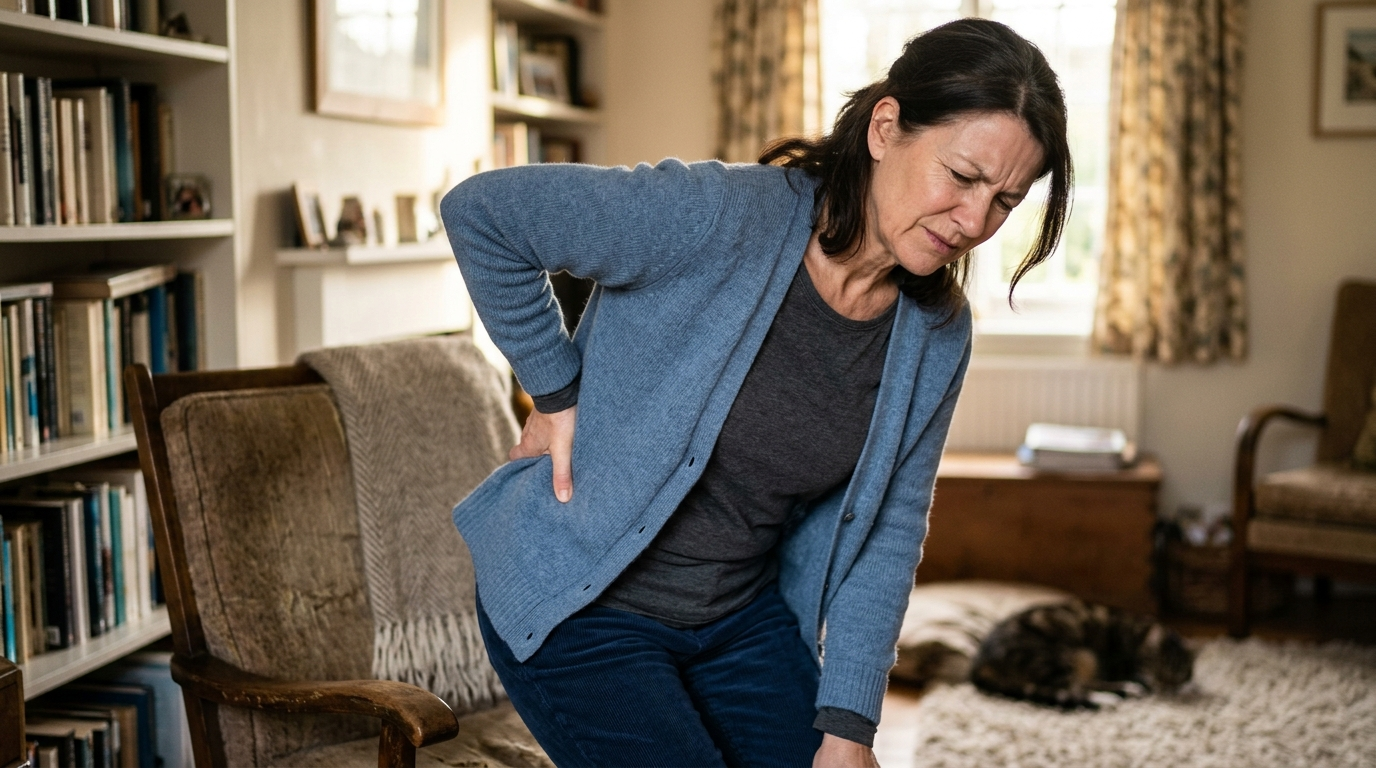
You know the routine. The alarm goes off, or you simply wake before it does, and the first thing you feel is not refreshed. It is a deep, dull ache somewhere around your lower back or hip. Sometimes it travels down into your buttock or runs along the back of one leg.
So you pause. You sit on the edge of the bed for a moment. You test the painful leg carefully before you stand, because experience has taught you that rushing those first few steps is a mistake. The stiffness usually eases after ten or fifteen minutes of moving around. But it is back the next morning, just as reliably.
If that pattern sounds familiar, you are almost certainly not imagining it. And you are probably not alone in assuming it is simply what getting older feels like.
But here is something worth considering. What if the way you feel at 7 in the morning is not entirely about age, and is at least partly about what your mattress is doing to your body during the hours you are least able to notice?
Sleep specialists use a term for this: the "Overnight Pressure Trap." It describes the way a mattress can feel perfectly comfortable when you first lie down, yet still allow pressure to accumulate around sensitive areas over several uninterrupted hours in bed. By morning, that accumulated pressure may be contributing to exactly the kind of stiffness and deep ache you are waking up with.
This article looks at why that pattern happens, why it is so easy to miss, and what some people are doing to address it without spending thousands of dollars on another mattress.
4.9 / 5
★★★★★
Rated by 18,314+ verified customers across the USA
5 Reasons Your Mornings May Feel Worse Than Your Evenings, and What the Overnight Pressure Trap Is Really Doing to Your Body
This is the part that confuses most people. The mattress feels fine when you lie down. You settle in, maybe adjust your pillow once or twice, and drift off without obvious discomfort. So when you wake feeling stiff and sore, the bed is the last thing you blame.
But there is an important difference between how a mattress feels during the first five minutes and how it behaves over five or six hours of sustained contact. In the first few minutes, the surface simply needs to feel soft enough under your weight. Over several hours of relatively still sleep, it needs to do something more specific: distribute your body weight evenly, contour around the natural curves of your hips and lower back, and relieve rather than allow pressure to concentrate around the areas most sensitive to sustained load.
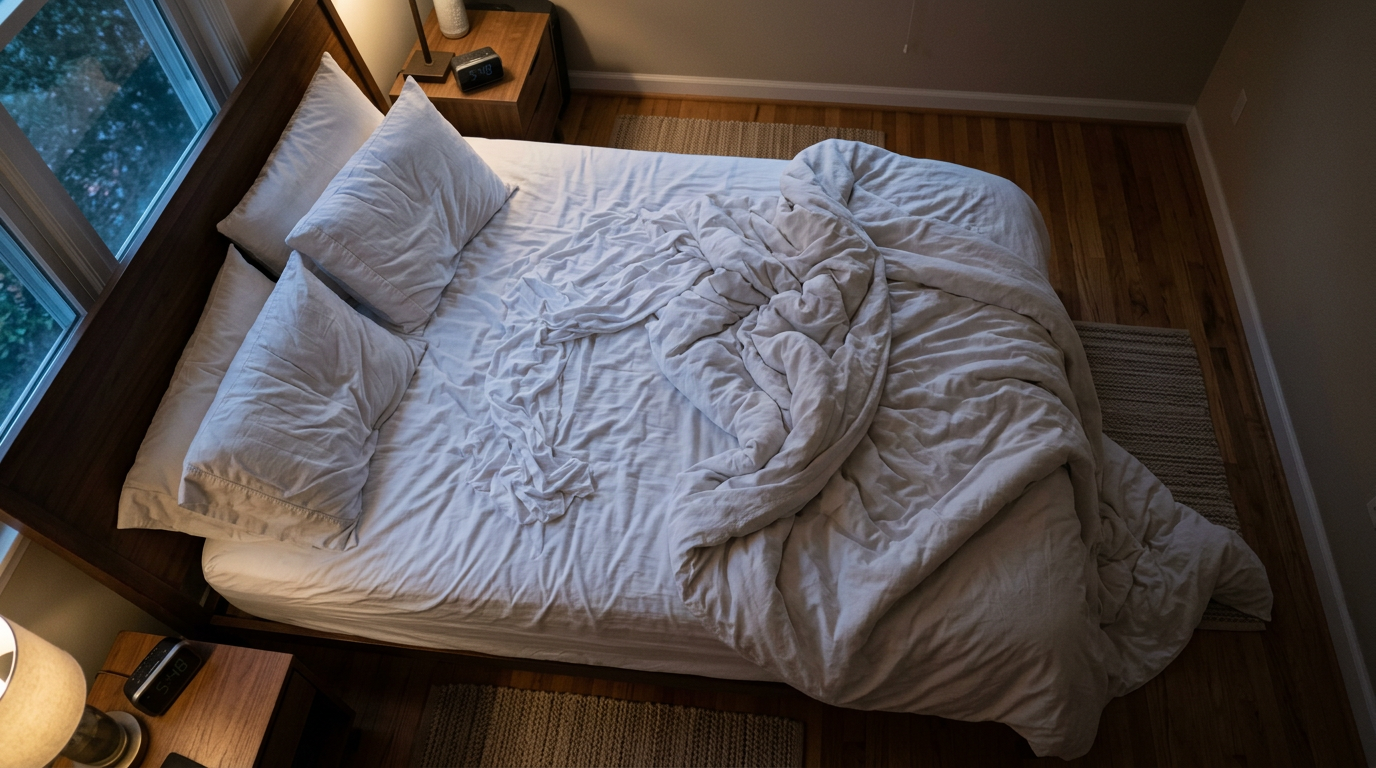
A mattress that fails at that second task, because it has worn unevenly, become slightly too firm, or developed compressed areas over years of use, may feel perfectly fine at bedtime while still setting what sleep specialists describe as an overnight pressure trap. You will not feel it happening. But you may feel the result every single morning.

Most people dealing with morning sciatica pain have already tried a long list of things. Pain creams applied before bed. A heating pad for twenty minutes. Stretches from a YouTube video. Supplements from a pharmacy. Pillows tucked under the knees or between the legs. Some have tried two or three different pain medications.
These approaches share a common limitation: they address how the body feels before sleep, but none of them change what happens to the body during sleep. A heating pad warms the muscles for an hour. A pillow between the knees can help with hip alignment. But once you fall asleep and stop consciously adjusting, the surface underneath you is doing the actual work, or failing to.
Pain creams and medications address sensation. They do not address pressure distribution. Stretches can reduce morning stiffness once it has already set in. They do not prevent the pressure from accumulating in the first place. After months of temporary relief and persistent morning stiffness, many people eventually conclude there is nothing to be done, that this is simply what their body does now. That conclusion is worth reconsidering.
If you sleep primarily on your side, which most adults over 50 do, often because it is easier on the lower back than sleeping on the stomach, the geometry of where your weight lands matters a great deal.
When lying on your side, most of your body weight is borne by two main contact points: the shoulder and the hip. Between those two points, your waist narrows. Your natural spine curves inward. If the mattress surface is too firm or too compressed to contour around that curve, the hip and shoulder absorb pressure they were not designed to sustain for hours at a time.
For someone with sciatica or lower-back sensitivity, concentrated hip pressure during sleep can be particularly uncomfortable. The sciatic nerve runs through the deep muscles of the buttock. Sustained pressure in that area, from a surface that cannot properly distribute weight around the hip, may contribute to the specific pattern of hip and buttock discomfort, or pain that travels down the leg, that is worst first thing in the morning and gradually eases as you move. It is not just anatomy. It is what the sleep surface does, or does not do, for several hours each night.
Most people accept light and interrupted sleep as normal at their age. It is common, but that does not mean it is inevitable or unrelated to what the sleep surface is doing.
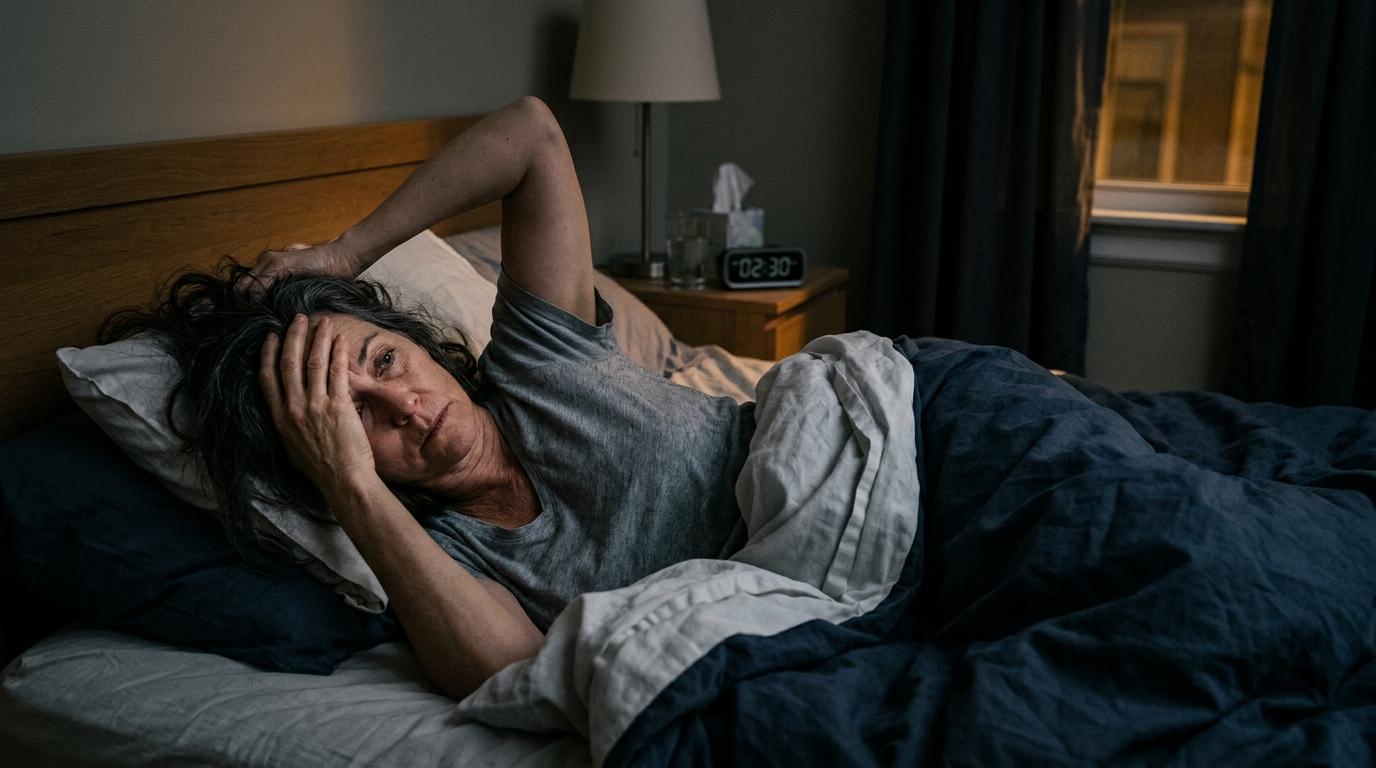
When a mattress does not contour around the body's pressure points, the body does something instinctive. It moves. It shifts position to temporarily redistribute the load away from the area of discomfort. You may not be fully conscious of this. You may not remember it in the morning. But if you wake frequently during the night, if you find yourself on a completely different part of the bed by morning, if you use multiple pillows to prop yourself into a position that feels sustainable, these are signals that your sleep surface is requiring constant compensation rather than providing consistent support.
People who sleep on a properly supportive surface tend to move less during the night because there is less discomfort triggering repositioning. They wake feeling more rested because the deeper, restorative phases of sleep are less frequently interrupted. "I wake up more tired than when I went to bed" is one of the most common things people say, and while that feeling has many possible causes, the quality of the sleep surface is one factor that is often overlooked and relatively straightforward to address.

When people finally decide the mattress might be contributing to the problem, many go to a mattress showroom. They spend an afternoon lying on display beds. They find something that feels wonderful in the store. They spend two thousand dollars, wait two weeks for delivery, and then discover the mattress that felt perfect under fluorescent showroom lights feels completely different after a week of actual sleep.
"It felt great in the store but horrible after a week" is one of the most consistent frustrations in mattress reviews. The showroom experience lasts five to ten minutes. The mattress needs to perform across eight hours of uninterrupted sleep, in every position you naturally move into, across every night for years. These are very different tests, and a mattress can pass the first while failing the second.
Beyond that, replacing a mattress that is otherwise structurally sound may not be necessary. The issue in many cases is not the mattress itself but the sleep surface, what the body is actually contacting and what that contact surface is doing with pressure over time. Addressing that layer first, before committing to a multi-thousand-dollar replacement, is the approach that a growing number of sleep specialists and their patients are finding worth trying.
That Is Why More Than 18,000 People in the USA Have Added OrthoBed to Their Existing Mattress
Not every sleep surface problem requires replacing the mattress underneath it. For many people, the mattress frame and core are still perfectly serviceable. What has changed, or what was always lacking, is the comfort and pressure-distribution layer that the body actually contacts during sleep.
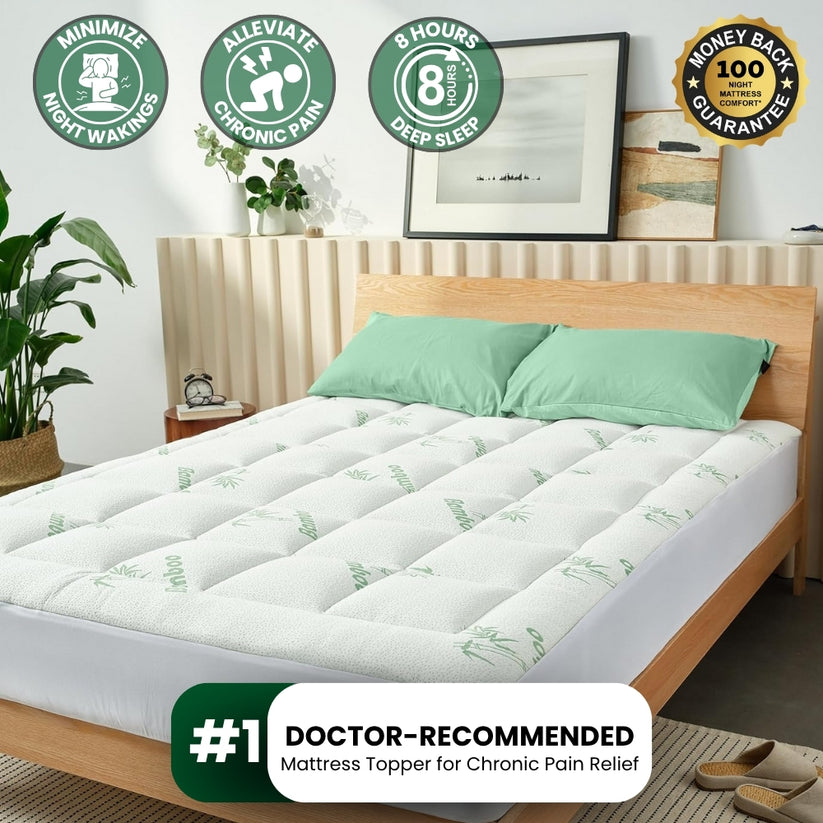
OrthoBed is designed to address exactly that. It sits on top of your existing mattress and adds a two-inch cushioning layer engineered to redistribute pressure more evenly, contour around the hips, shoulders, and lower back, and create a more supportive and comfortable sleep surface, without the cost, uncertainty, or disruption of replacing the mattress itself.
It is not a luxury item. It is a practical, affordable first step for anyone who suspects their sleep surface may be contributing to morning stiffness and discomfort, and who would rather not gamble two thousand dollars on another mattress that might feel wrong after a week.
How OrthoBed Is Designed to Help With the 5 Problems Above
-
✓
Reduces concentrated pressure at the hip and shoulder, designed to address the specific side-sleeper pressure problem that can contribute to morning sciatic discomfort
-
✓
More even weight distribution across the sleep surface, rather than allowing pressure to pool around sensitive areas over several hours
-
✓
Adaptive contouring around hips, lower back, and shoulders, follows the natural curves of the body rather than requiring the body to adapt to a rigid surface
-
✓
Two-inch cushioning layer that refreshes an existing mattress, no need to replace a structurally sound mattress to improve its sleep surface
-
✓
Breathable bamboo cover designed for temperature comfort, addresses the common complaint that toppers trap heat and make sleep uncomfortable
-
✓
Anti-slip backing keeps it securely in place, no sliding or bunching during the night
-
✓
Fits all standard mattress sizes, no measuring, no guessing, no complicated setup
What Makes OrthoBed Different From a Standard Foam Topper
Not all mattress toppers are built the same. Most of the thin foam options sold at big-box stores compress within a few months and offer little in the way of actual pressure relief. They feel softer for a few weeks. Then they feel much the same as the mattress beneath them.
OrthoBed is designed with a different purpose. It is not simply softness on top of an existing surface. It is a structured pressure-distribution system intended to do specific work during sleep.
🏔
High-Density Orthopedic Foam Base
Supports spinal alignment and resists the compression and sagging that makes most toppers lose their effectiveness within months.
◯
Pressure-Relief Comfort Layer
Designed to reduce concentrated pressure around hips, shoulders, and lower back, the areas most affected by the Overnight Pressure Trap.
⊕
Body-Responsive Support Zones
Distributes body weight across a wider contact area, so no single point, like the outer hip, bears the full load through the night.
🌿
Breathable Bamboo Cover
Designed for better airflow and more comfortable temperature regulation during sleep, no overheating, no waking in a sweat at 3 in the morning.
A note about persistent or severe symptoms: OrthoBed is designed to support more comfortable sleep and may help reduce morning stiffness associated with pressure on the sleep surface. It is not a medical treatment and does not treat sciatica, nerve damage, or spinal conditions. If you experience worsening pain, weakness in a leg or foot, numbness that does not ease with movement, or any changes in bladder or bowel function, please consult a qualified healthcare professional promptly. These symptoms may require medical evaluation.
What Customers Are Saying
More than 18,000 people in the USA have tried OrthoBed. The following experiences are drawn from verified customer feedback and reflect the kinds of changes people commonly report.
For the better part of two years I was waking up with pain around my left hip that would travel down my leg. I tried everything. A chiropractor, stretches, one of those wedge pillows between my knees. They all helped a little but nothing changed the pattern. My daughter kept suggesting the mattress and I kept insisting it was fine because it felt fine when I got into bed. She finally ordered OrthoBed for my birthday. After about ten days I noticed I was not lying there in the morning waiting for my hip to calm down. After three weeks I was getting up without that cautious first-step routine. I am on my second month now. It is the most effective thing I have tried.
I was seriously pricing new mattresses. We are talking $2,400 for one that a salesperson swore would fix my problem. My wife suggested we try something less drastic first. I was skeptical because I had already bought two cheap foam toppers from a department store and both of them went flat within a few months and made no difference to the stiffness. OrthoBed is different. It actually has some structure to it. The first morning after sleeping on it I thought it was a coincidence. By the end of the first week I realized I had not been lying on the edge of the bed waiting to feel able to stand up. Saved ourselves a lot of money.
I used to wake up two or three times a night just to roll over because one hip would get so uncomfortable. Then I would lie there for a few minutes trying to find a position that did not hurt before I could get back to sleep. My husband said I was restless every night. I honestly thought it was just age. Three weeks with OrthoBed and I am sleeping through. Not perfectly, I am still 58. But the constant repositioning has mostly stopped. My mornings are not painless but they are genuinely better than they were. That is more than I expected for the price.
OrthoBed vs. The Alternatives Most People Try First
| What Matters for Morning Comfort |
New Mattress |
Cheap Foam Topper |
OrthoBed™ |
| Addresses the sleep surface (not just symptoms) |
✓ |
✗ |
✓ |
| Hip and shoulder pressure relief for side sleepers |
Varies widely |
✗ |
✓ |
| Predictable comfort (not just in the showroom) |
✗ |
Sometimes |
✓ |
| Breathable, temperature-friendly surface |
Varies |
✗ |
✓ |
| Maintains shape over months of use |
✓ |
✗ |
✓ |
| 100-night risk-free trial |
Rarely |
✗ |
✓ |
| Typical cost |
$2,000+ |
$30, $60 |
From $99 (56% off) |
Current Inventory Status
⚠ Sell-Out Risk: HIGH
Due to recent demand, stock levels are running lower than usual. The current 56%-off pricing and free gift offer may not be available once this batch is gone.
🚨 UPDATE: August 11, 2026: Demand for OrthoBed has increased significantly following recent features in sleep wellness publications. Inventory is limited at current pricing.
🏷 Save 56% Off: Today Only
OrthoBed™ Mattress Topper
🎁 FREE GIFT INCLUDED: Bamboo Pillowcase + Eye Mask | Free Shipping
NOTE: This special pricing and free gift offer is NOT available on Amazon or any third-party retailer. Only available at the official store.
🛡
100-Night Money-Back Guarantee
🔒
Safe & Secure Checkout
🚚
Free Shipping Included
✅
No-Hassle Returns
GET YOUR ORTHOBED NOW: SAVE 56% OFF →
★ Rated 4.9/5 by 18,314+ customers | Free Pillowcase & Eye Mask included | 100-Night Trial
🛡
100-Night Money-Back Guarantee
Try OrthoBed in your own bed for 100 nights. If you are not genuinely sleeping more comfortably, contact the team for a full refund. No forms to fill out, no awkward conversations. The risk is entirely on OrthoBed, not on you.
🌿
Hypoallergenic Materials
Bamboo cover is gentle on sensitive skin. No harsh chemical odors on arrival.
🇺🇸
18,000+ US Customers
Trusted by people across the country dealing with the same morning stiffness pattern.
📋
Universal Fit
Fits all standard mattress sizes. Anti-slip backing keeps it securely in place all night.
☀
Breathable & Cool
Bamboo surface designed for better airflow, no overheating, no waking from heat discomfort.
Join 18,000+ people who stopped dreading their mornings
Stock at the current 56%-off price is limited. The free Bamboo Pillowcase and Eye Mask are included with this offer only.
Order OrthoBed Today, 56% Off →
100-Night Guarantee · Free Shipping · Free Gift Included