5 Signs Your Old Mattress Is Making Your Sciatica Worse at Night (And the Simple $99 Fix More People Over 50 Are Trying Before Spending Thousands on a New Bed)
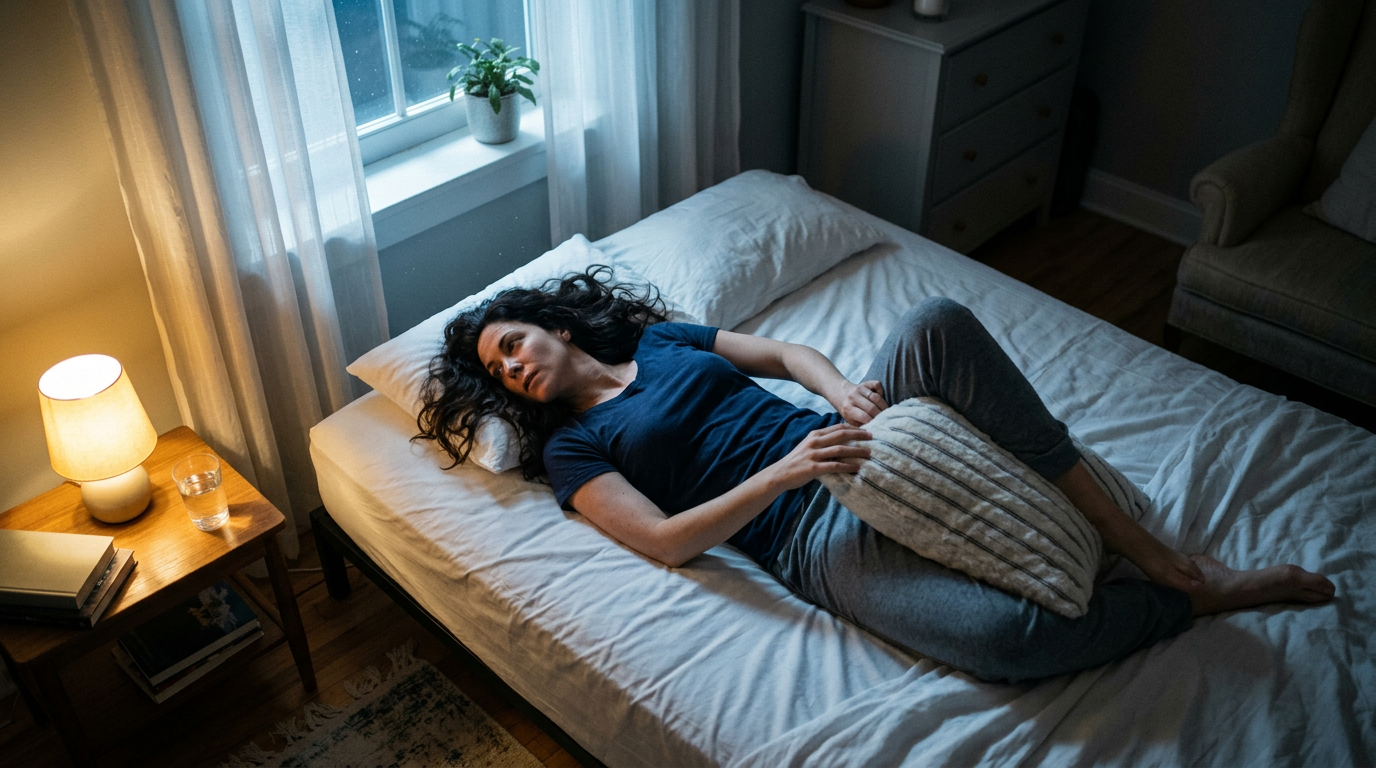
Thousands of adults over 50 are finally sleeping through the night again after one simple change to their existing bed.
You've been lying awake again. Maybe it starts an hour or two after you fall asleep. A dull, deep ache in your lower back. A burning sensation that travels down through your hip and into your leg. You shift onto your side. You try your back. You wedge a pillow under your knees. Nothing quite works.
By morning, you're more tired than when you went to bed. You brace yourself before you even stand up, knowing the stiffness waiting for you. "I dread getting out of bed in the morning" is something a lot of people over 50 say quietly to themselves. They assume it's just getting older. They assume it's just something they have to live with.
But here's what most of them don't know: the cause might not be their sciatica alone. According to sleep specialists, the surface you sleep on plays a much bigger role in nighttime sciatica discomfort than most people realize. And the fix, for many, doesn't require a $2,000 new mattress or stronger medication. It requires understanding five specific things that happen while you sleep.
Why Sciatica Tends to Feel Worse at Night

The sciatic nerve is the longest nerve in the human body. It runs from the lower spine, through the pelvis, down through the buttocks and all the way into the legs. When something irritates it, you feel it. And nighttime has a way of making that irritation much harder to ignore.
During the day, movement keeps circulation going. Your muscles stay active. Your body is distracted. But the moment you lie still for hours, pressure builds. It concentrates around the exact spots where the sciatic nerve sits closest to the surface: your lower back, your hips, your pelvis.
If the surface you're sleeping on isn't responding to your body's shape, that pressure doesn't get distributed. It just builds. Night after night.
- You wake up 2, 3, sometimes 4 times a night to shift positions
- One hip or the lower back aches after just an hour of lying still
- You feel a tingling or numbness that travels down into your leg during the night
- Mornings mean at least 10-15 minutes of stiffness before your body loosens up
- You've slept 7 or 8 hours and still feel exhausted when the alarm goes off
- You've started avoiding activities you love, worried about making the pain worse
If two or more of those describe your nights, you're not alone. And you're not imagining it. Sleep researchers have found that mattress support quality is one of the most overlooked factors in chronic lower back and hip discomfort. A study examining participants on medium-firm, pressure-distributing surfaces found significantly better sleep quality and reduced morning pain compared to those on unsupportive mattresses.
The problem tends to get worse after 50, because body composition changes. There's less natural cushioning around the hips and pelvis. The muscles that normally absorb pressure during sleep get softer. And most people are still sleeping on the same mattress they bought 8, 10, sometimes 15 years ago.
The 5 Signs Your Mattress Is Making It Worse
Here's something most doctors don't tell their patients: treating sciatica during the day while sleeping on the wrong surface at night is like trying to fill a bucket with a hole in the bottom. You're working against yourself for eight hours straight.
The following five signs suggest your sleeping surface is actively contributing to the pressure building around your sciatic nerve each night. Read through them carefully.
Morning stiffness that takes more than 10 minutes to ease isn't just "getting older." It's a signal that your body spent the night in a compressed, unsupported position. When a mattress sags in the middle or loses its responsiveness over time, your lower back and hips sink into that gap. The muscles tighten around it overnight, trying to compensate. You wake up and feel the result immediately.
Constant position-shifting during the night isn't restlessness. It's your body's involuntary response to pressure building in one spot. When the surface beneath you doesn't redistribute weight evenly, your hips and lower back accumulate pressure until your brain wakes you up enough to move. People with sciatica are especially sensitive to this because the nerve itself is already irritated. Even small pressure concentrations around the hip and pelvis feel much more intense.
If your sciatica symptoms feel significantly worse first thing in the morning compared to how they felt when you lay down the night before, that's a strong signal. Pressure accumulation during sleep can inflame the tissues around the sciatic nerve. An overly firm or sagging mattress is one of the most common reasons this happens. The surface isn't adapting to your body, so your body is bearing the full burden.
Most mattresses lose a significant portion of their pressure-relief capability after 6 to 7 years of regular use. The foam or springs that once distributed your weight begin to compress permanently in the spots where you sleep most. Those permanent indentations create uneven support, which means your pelvis and lower back aren't being held at the same level. That small misalignment, repeated over thousands of nights, puts sustained stress on the sciatic nerve region.
This one is telling. If you sleep noticeably better in a hotel, at a family member's house, or even on a sofa with decent cushioning, your mattress is almost certainly part of the problem. Many people describe wanting their bed to feel like a luxury hotel mattress. That feeling isn't just about comfort. It's about proper pressure distribution. Hotel mattresses, particularly in mid-range and higher-end properties, are designed and replaced on a schedule specifically to maintain that support. Your mattress at home may not have had that care in years.
"I kept thinking the pain was just my sciatica getting worse. My doctor suggested I look at what I was sleeping on before we talked about stronger medication. That conversation changed everything."
Home & Garden Trends reader, 62, OhioHere's What Most People Try (And Why It Falls Short)

Before we get to what's actually working for tens of thousands of people, it's worth understanding why the usual solutions keep disappointing.
A new mattress sounds like the logical answer. But at $2,000 or more, it's a significant gamble. "It felt great in the store but horrible after a week" is one of the most common complaints about new mattress purchases. You spend an hour testing it on a showroom floor under bright lights. Then you get it home, sleep on it for three nights in your actual sleeping position, and realize it doesn't support you the way you thought it would. Returns are complicated. And the money is already spent.
Pain medication is the other common route. But it only masks the symptom. It does nothing for the pressure building around your sciatic nerve for eight hours each night. The source of the problem is still there when you wake up.
Cheap foam toppers are the third option most people try. And most of them are disappointed within weeks. Thin, low-density foam compresses quickly under body weight. It has no orthopedic design. The hip and lower back pressure points, the exact spots that need the most relief, get minimal cushioning because the foam flattens right where you need it most.
What people actually need is something specifically designed around the way pressure concentrates during sleep, in a body that has natural sensitivity around the lower back, hips and pelvis. That's a different design brief entirely from a general-purpose foam topper.
The Simple Upgrade That's Working for People Over 50
After years of hearing the same story from patients (money spent on new mattresses that didn't help, cheap toppers that compressed within months, medications that only dulled the problem without addressing it), sleep and orthopedic specialists began pointing people toward a different approach.
Not a new mattress. Not a general-purpose foam pad. A pressure-relief sleep system designed specifically for the problem of nighttime pressure accumulation around the lower back, hips and pelvis.
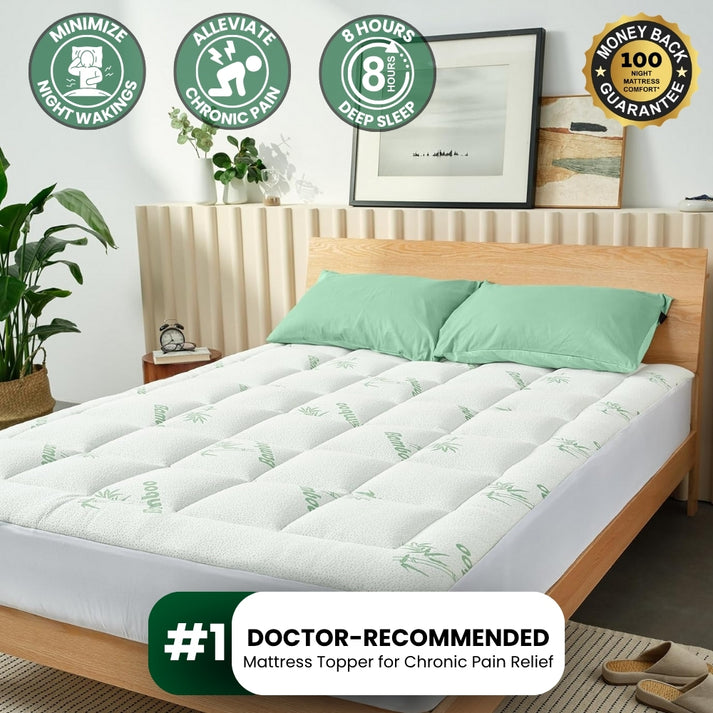
Home & Garden Trends developed the OrthoBed Mattress Topper after working with sleep specialists to understand exactly what happens to pressure distribution when people over 50 lie still for extended periods. The result is a multi-layer orthopedic system designed to sit on top of your existing mattress and transform how your body is supported through the night.
The idea is straightforward: before spending $2,000+ on a new mattress you haven't properly tested, try adding the right support layers above your existing one. For the majority of people, the mattress itself isn't completely worn out. It just lacks the precise pressure-relief engineering that sensitive bodies need.
- Multiple pressure-relieving foam layers that cushion the lower back, hips and pelvis specifically
- Body-responsive support that adapts to your shape as you sleep, not a static surface that fights you
- Designed for both side and back sleepers, the two most common positions for people with sciatica
- Anti-slip base and fitted corner straps so it stays exactly where you put it through the night
- Compatible with virtually all standard mattress sizes and types
How the OrthoBed Sleep System Works
The OrthoBed isn't a single layer of foam. It's a layered pressure-relief system, and each layer has a specific job.
What People Are Saying After Their First Few Weeks
These aren't polished marketing quotes. They're the kinds of things real customers write when they've been struggling for a long time and something actually changes.
What to Expect: A Realistic Week-by-Week Picture
Everyone's body responds a little differently, but based on customer feedback and sleep specialist guidance, here's what most people experience in the first several weeks with OrthoBed.
The Adjustment Period
Your body is adapting to a new support surface. Some people notice an improvement immediately. Others take a night or two for their muscles to stop bracing against the unfamiliar pressure-relief. You may sleep longer in one position than usual because you're not being woken by pressure buildup. This is a good sign, not a problem.
Fewer Nighttime Wake-Ups
Most customers report noticing a reduction in how often they wake up to change position within the first week. The body-responsive foam is beginning to distribute your weight more evenly, which means pressure doesn't build to the point of disrupting sleep as often. You may still wake up once or twice, but the frequency should begin to reduce.
Morning Stiffness Starts to Ease
By the end of week two, many people report that their morning routine has changed. The 10-20 minute stiffness ritual is becoming shorter. Getting out of bed is less of a bracing moment. This is because the muscles around the lower back and hips have spent several consecutive nights without accumulating the same level of sustained pressure.
Consistently Better Sleep Quality
By the end of the first month, most customers describe a genuine shift in how rested they feel. The tingling or burning that traveled down through the hip and leg during the night is less frequent or less intense. Morning energy levels are noticeably better. Many people find they're returning to activities they'd quietly given up.
A New Normal
By the 60 to 100-night mark (which is exactly the period covered by OrthoBed's comfort guarantee), customers have established a genuinely different sleep baseline. The pattern of dreading mornings, bracing before standing, and waking exhausted has broken for the majority of people who use the topper consistently. Many say they wish they'd tried it years earlier.

"I feel like a real person in the morning again." The results OrthoBed customers describe aren't subtle. They change how you start every day.
OrthoBed vs. The Alternatives
Here's an honest look at how OrthoBed compares to the other routes most people consider when dealing with nighttime sciatica discomfort.
| What We're Comparing | OrthoBed Topper | New Mattress ($2,000+) | Cheap Foam Topper |
|---|---|---|---|
| Designed specifically for pressure-point relief | ✓ | ✗ | ✗ |
| Works on your existing mattress | ✓ | ✗ | ✓ |
| Risk-free trial period (100 nights) | ✓ | ✗ | ✗ |
| Under $150 | ✓ | ✗ | ✓ |
| Multi-layer orthopedic foam system | ✓ | Varies | ✗ |
| Anti-slip backing and corner straps | ✓ | N/A | ✗ |
| Maintains support over time without flattening | ✓ | Varies | ✗ |
| Breathable (no overheating at night) | ✓ | Varies | ✗ |
| Available today without delivery delays | ✓ | ✗ | ✓ |
NOTE: This pricing is NOT available on Amazon, eBay or in retail stores. This offer is exclusive to Home & Garden Trends direct customers.
100-Night Comfort Guarantee. If you don't sleep better, you pay nothing. Free shipping included.
The 100-Night Comfort Guarantee
Home & Garden Trends stands behind OrthoBed completely. Sleep on it for up to 100 nights. If you're not sleeping more comfortably, waking with less stiffness and spending fewer of your nights shifting through the dark trying to find a pain-free position, contact the team for a full refund. No complicated return process. No pressure. If it doesn't change how you sleep, you owe nothing. That's how confident the team is in what OrthoBed does for people over 50 dealing with nighttime sciatica discomfort.
You Deserve to Wake Up Feeling Like Yourself Again
You're not old. You're a person who gardens, walks, spends time with the people you love, and still has places to be and things to do. Waking up exhausted, stiff and already dreading the day ahead isn't the life you planned. And for many people, it doesn't have to be.
OrthoBed won't fix everything. But for thousands of adults over 50, it's been the change that finally made nights manageable and mornings worth waking up for. At a fraction of the cost of a new mattress, with a 100-night guarantee removing all the risk, there's a reasonable case for trying it before you try anything else.
Stock at this promotional price is limited. The offer on this page isn't available elsewhere.
GET ORTHOBED NOW: Up to 55% Off Today