Physiotherapist Explains: “A Simple Change That May Make Nights With Sciatica More Comfortable, Without Replacing Your Mattress”
Why sciatica can feel worse at night, and the simple overnight bedtime test that ended 17 years of agony (without pills, shots, or surgery)


If you're reading this with that burning pain shooting down your leg...
If you haven't slept a full night in months...
If there are moments when it feels like the pain starts in your lower back, cuts through your hip and refuses to let you get comfortable...
Then the next 3 minutes may completely change the way you think about your nights.
But, I warn you:
What you're about to read may make you question something you've probably been told for years.
Because the problem may not be your entire mattress.
And replacing the whole thing may not be the first thing you should try.
Not because a new mattress can't help.
But because there's one much simpler variable most people never test first.
When nighttime sciatica becomes unbearable, people are often told to try another pillow...
Another sleeping position...
Painkillers...
A firmer mattress...
Or eventually spend $1,000, $2,000 or more replacing the whole bed.
But there's something about what happens between your body and the mattress that rarely gets talked about.
My name is Dr. Alan Whitfield.
For years, I've watched people struggle with the same frustrating pattern.
They can move around reasonably well during the day.
Then they lie down at night...
And suddenly the hip starts aching, the lower back tightens and that familiar burning sensation begins travelling down the leg.
And that's what led me to question whether we were focusing on the wrong part of the bed.
But first, let me tell you about the night that changed the way I looked at sciatica and sleep...
THE NIGHT I STARTED LOOKING AT SCIATICA DIFFERENTLY...

It was 2:47 AM on a Tuesday morning.
I woke up to the sound of my wife Sarah crying in the bathroom.
Not quietly crying.
Sobbing.
The kind of uncontrollable sound that makes your heart sink before you even know what's happened.
I found her curled up on the bathroom floor, knees pulled toward her chest, her entire body trembling.
"I can't keep doing this," she whispered. "I can't live like this."
Her sciatica had flared again.
That same brutal pain starting in her lower back, cutting through her hip and shooting down her leg like a burning wire had been pulled through her body.
And all I could do was stand there.
Helpless.
Someone who was supposed to understand the body, yet couldn't even figure out how to help his own wife.
I'd already tried everything I knew.
Stretching.
Exercises.
Massage.
Ice.
Heat.
TENS.
Some things helped temporarily.
Nothing seemed to make a lasting difference.
And every professional we turned to seemed to have another answer.
Her chiropractor had her coming back week after week for adjustments.
Pain management meant more appointments, medications and injections.
Then came the conversation neither of us wanted to have.
Surgery.
A major spinal procedure with a major price tag and no guarantee she'd finally be comfortable again.
That night, something changed in me.
I couldn't keep watching the woman I loved structure her entire life around pain.
I couldn't accept that our only options were another appointment, another treatment or another expensive procedure.
So I started questioning everything I thought I understood about back pain.
And more importantly...
I started looking much more closely at what was happening during the eight hours she was supposed to be resting.
THE REAL ROOT CAUSE OF SCIATICA
Picture your spine like a stack of jelly donuts.
The vertebrae are the donuts.
The discs between them are the soft filling.
When you're younger, those discs hold plenty of water. They're thick, springy and help absorb pressure while keeping space between the bones of your spine.
But as you get older, those discs can gradually lose water.
They get thinner.
Flatter.
Less flexible.
Like jelly donuts left sitting out too long.
And as a disc loses height, the space around the nerves in your lower spine can become tighter.
When the sciatic nerve gets irritated or compressed?
It can feel like a garden hose trapped under a truck tire.
That's the shooting pain down your leg. The electric jolt when you stand. The burning through your hip or glute that refuses to fully disappear.
But here's the part most people never think about.
Your spinal discs have very little direct blood supply.
Instead, fluid and nutrients move through them largely through changes in pressure and movement.
Think of a sponge.
Pressure pushes fluid out.
Release allows fluid back in.
And when discs lose water and height, they don't absorb pressure the way they once did.
That can leave an already-sensitive sciatic nerve with even less room.
Not every case of sciatica has the same cause.
But the pain itself is often only the alarm.
Something is irritating the nerve.
And that got me thinking about the seven or eight hours we spend lying in bed every night.
During the day, you're constantly changing position.
At night, your hips, pelvis and lower back can press into the same surface for hours.
You roll over.
Move your leg.
Put a pillow between your knees.
Find a comfortable position.
Then twenty minutes later, you're searching again.
That's when I realized the mattress doesn't have to cause sciatica to still affect how it feels at night.
If nighttime is when your sciatica becomes hardest to ignore, then the surface underneath you is one of the simplest variables worth testing.
Not because a mattress topper "cures" sciatica.
But because an already-irritated area can feel very different depending on how it’s cushioned and supported for seven or eight hours.
THE NIGHTTIME VARIABLE MOST SCIATICA ADVICE BARELY TALKS ABOUT
I want to be very clear about this.
Sciatica is nerve pain. A mattress topper does not remove a herniated disc, reverse spinal stenosis or replace medical treatment.
But there is another part of the nighttime problem that I think is much easier to overlook:
The surface your hips, pelvis and lower back have to tolerate for seven or eight hours.
If the mattress feels brutally hard around the hip, you may spend the night constantly repositioning. If the bed lets the pelvis sink awkwardly, it can become harder to settle into a comfortable position.
The question I started asking: what if the mattress is not causing the sciatica, but the surface underneath you is making the night harder than it needs to be?
WHAT I FOUND WHEN I LOOKED AT THOSE SEVEN HOURS

I started looking specifically at sleep guidance for people dealing with sciatica.
One detail stood out.
Cleveland Clinic's guidance on sleeping with sciatica discusses experimenting with spinal alignment, pillows and even a mattress topper to make small changes to the mattress you already own.
That does not mean a topper treats the irritated nerve.
But it confirmed something I had started to suspect.
Sleep-surface comfort is a real variable worth testing.
The more I thought about it, the more obvious the next question became.
WHY WAS I TELLING PEOPLE TO REPLACE THE WHOLE BED BEFORE TESTING THE TOP LAYER?

A new mattress is a huge experiment.
You can spend $1,000, $2,000 or more, wait for delivery, haul the old mattress away, then discover the new one still does not feel right at 2am.
So I started looking for a smaller experiment.
Change the surface without replacing the entire support system underneath it.
THAT SEARCH LED ME TO ORTHOBED
That search eventually led me to OrthoBed, a 2-inch bamboo mattress topper designed to change the feel of the mattress you already own by adding cushioning and a more forgiving sleep surface.
What caught my attention was how simple the experiment was. I did not need to ask someone to throw away a perfectly usable mattress. I could ask them to test one variable first: the surface their body actually touches all night.
- 2-inch comfort layer after expansion
- Designed to cushion hips, shoulders and lower back
- Breathable bamboo sleep surface
- Fits over your existing mattress
- 100-night money-back guarantee
HERE'S EXACTLY WHAT ORTHOBED CHANGES WHILE YOU SLEEP
Here is exactly how I think about it.
When you lie down on OrthoBed, I am not asking you to believe it somehow "switches off" the sciatic nerve in a few minutes.
I am asking you to change the surface your body has to lie against for the next seven or eight hours, then judge what happens in your own bed.
WHEN YOU FIRST LIE DOWN: THE CUSHIONING PHASE
The 2-inch comfort layer adds a softer barrier between your body and the mattress underneath.
That matters most around the places that take the brunt of side sleeping: the hip, shoulder and lower-back area. Instead of meeting a hard mattress surface directly, your body settles into a more forgiving top layer.
AS YOU SETTLE IN: THE POSITIONING PHASE
Sciatica can make finding a tolerable sleep position frustrating. One position feels fine for five minutes, then the hip starts complaining. You roll. The leg starts tingling. You roll again.
A more forgiving sleep surface gives you another variable to work with while you experiment with side sleeping, back sleeping and strategic pillow support.
THROUGH THE NIGHT: CUSHIONING ON TOP, SUPPORT UNDERNEATH
OrthoBed does not replace the structure of your mattress. It sits on top of it.
So if your mattress is still structurally sound but simply feels too hard or unforgiving, you keep the support system underneath while changing the part your body actually touches all night.
WHEN YOU CHANGE POSITIONS: A MORE FORGIVING LANDING
People with nighttime sciatica often spend a lot of time repositioning. Each turn puts the hip, pelvis and lower back against a slightly different part of the bed.
The extra comfort layer is designed to cushion those high-contact areas so the mattress surface itself is less of a fight while you look for the position that feels best.
BY MORNING: HERE'S WHAT YOU'RE ACTUALLY TESTING
Not whether a topper "cured" sciatica overnight.
You are looking for practical changes: Did you spend less time fighting the bed? Was it easier to settle? Did your hip and lower back feel less beaten up by the mattress surface? Could you stay in a comfortable position longer before needing to move?
THE RESEARCH DETAIL THAT MADE ME PAY ATTENTION
“Use your pillows or even a mattress topper to make some small changes.”
When I found Cleveland Clinic's sciatica sleep guidance, this was the line that mattered to me. Their guidance discusses experimenting with spinal alignment, pillow support and the feel of the mattress you already own before assuming the whole mattress needs replacing.
That is the role OrthoBed is being used for here: changing the sleep surface, not claiming to treat the medical cause of sciatica.
What I Want You To Notice At Night
- A softer, more forgiving top layer over the mattress you already own
- Extra cushioning around the hips, shoulders and lower back
- A surface that works with side- and back-sleep positioning experiments
- The ability to change the feel of your bed without immediately replacing the whole mattress
- 100 nights to decide whether the change in sleep-surface comfort is meaningful for you
Let Me Show You What Managing Sciatica REALLY Costs In America:
Ongoing Physical Therapy Route:
- Published consumer estimates: around $50-$350 per visit
- 8 visits = roughly $400-$2,800
- Plus travel, time off work, parking and repeat appointments
The Imaging + Pain Management Route:
- Lumbar MRI: around $293-$1,980 on published cash-price marketplaces
- Image-guided epidural steroid injection: around $700-$2,970 each
- If more than one injection is recommended, the numbers multiply quickly
The Surgical Route, When It Is Medically Appropriate:
- One current spine center publishes a bundled cash price of $15,000 for lumbar endoscopic microdiscectomy / laminotomy
- Other facilities may charge considerably more depending on insurance, hospital fees and region
- Recovery time can also create an indirect cost through missed work and reduced activity
The “Maybe I Just Need A New Mattress” Route:
- Many quality queen mattresses fall around $600-$2,000+
- Premium models can climb well beyond that
- And you still do not know how it will feel at 2am until you actually sleep on it
And this is the part that started to frustrate me.
Not because I think physical therapy, imaging, injections or surgery are useless. I do not. For the right person, they may be completely appropriate.
But if one part of your nighttime problem is simply that the current mattress feels brutal against your hip, pelvis or lower back, I think replacing the whole bed is a very expensive first experiment.
WHEN A SIMPLE SLEEP-SURFACE CHANGE COMPETES WITH A MULTI-BILLION-DOLLAR BACK-PAIN MARKET

The more I looked at the economics around back pain, the harder one fact was to ignore.
Back pain is big business in America.
Appointments. Imaging. Injections. Procedures. Prescription management. Premium mattresses. Ergonomic equipment.
Again, I am not telling you those options are bad. Some are completely appropriate when a clinician believes they are medically necessary.
But I do not need a conspiracy theory to point out an obvious economic reality:
The system is built around expensive interventions. A simple change to the surface you sleep on is almost too straightforward to get much attention.
I would never tell you OrthoBed replaces medical treatment or removes the underlying cause of sciatica.
What I like about it is that it lets you test one much smaller variable at home:
- Adds cushioning where the hip, pelvis and lower back meet the mattress
- Works during the seven or eight hours you are actually in bed
- Lets you change the sleep surface without throwing away the mattress underneath
- Costs less than many single appointments or procedures
- Gives you 100 nights to decide whether the change is meaningful for your sleep comfort
And that is the part the expensive routes cannot answer for you:
What happens if you simply make the bed more forgiving around the areas that keep waking you up?
THE RESULTS THAT MATTER HAPPEN BETWEEN BEDTIME AND MORNING

What I can honestly say the published guidance supports
Cleveland Clinic's guidance on sleeping with sciatica specifically recommends experimenting with alignment and notes that people can use pillows or even a mattress topper to make small changes to the mattress they already own.
That does not prove a topper treats sciatica. It does support the exact experiment OrthoBed is designed for: changing the sleep surface before replacing the entire bed.
So what do I want you to actually judge during the 100-night trial?
- Can you stay in a comfortable side- or back-sleeping position longer?
- Does the mattress feel less harsh around the hip and pelvis?
- Are you spending less time hunting for a tolerable position at night?
- Does the bed feel more forgiving without losing the support underneath?
- Do your nights feel meaningfully more comfortable on the topper than without it?
And before I ask you to try it, I want you to see what real OrthoBed customers are actually saying:
“We are really pleased with this mattress topper. It is comfortable and seems to be helping with my chronic back pain. Also this topper is letting us sleep cooler. I would recommend this product and the customer service was awesome when I was having a problem with my delivery.”
Nancy Hunnicutt · 5 out of 5 · Verified buyer, Judge.me
“I am not tossing and turning all night like I used to. I wake up feeling more rested.”
Dana Kerby · 5 out of 5 · Verified buyer, Judge.me
“I had planned to buy a new mattress, and my cousin suggested I get the topper instead. I am glad I did.”
Rose Schofield · 5 out of 5 · Verified buyer, Judge.me
“I tried this personally before recommending it, and it exceeded expectations. The orthopedic zones really support spinal alignment.”
Lindsay · 5 out of 5 · Judge.me review, not marked verified buyer
THE 56% OFF "IN YOUR FACE" TO THE PAIN INDUSTRY

You want to know why I think this offer makes sense?
Because once I put the numbers next to each other, replacing an entire mattress before testing the sleep surface started to look backwards.
Physical therapy can run into the hundreds or thousands. Imaging and injections can climb into the thousands. A new mattress can easily cost four figures.
So I would rather you do the opposite.
Test the smaller variable first. Then decide whether a bigger intervention is even relevant to the sleep-surface problem you are dealing with.
- Less than many single specialist or therapy appointments
- Far less than one image-guided epidural injection
- A fraction of the cost of replacing a quality mattress
- And you can test it on the bed you already own
Not another treatment. Not another appointment. A simple 100-night test of one overlooked nighttime variable: the surface underneath you.
I am not asking you to believe a mattress topper cures sciatica. I am asking you a much simpler question:
What if making your existing bed more forgiving is enough to make your nights meaningfully more comfortable?
CHECK AVAILABILITY NOWTHE CHOICE THAT COULD DEFINE YOUR NEXT 100 NIGHTS

Look. I understand the skepticism.
You have probably bought things before that sounded promising and ended up becoming expensive dust collectors.
You may have changed pillows. Tried stretches. Bought heat packs. Looked at a new mattress. Maybe you have already spent more money than you want to think about.
So here is the promise I am comfortable making:
Put OrthoBed on the mattress you already own and give the sleep-surface change a fair test for up to 100 nights.
Judge the things that matter in your own bedroom:
- Does the mattress feel less harsh around your hip and pelvis?
- Is it easier to find a side or back position you can stay in?
- Do you spend less time constantly shifting around?
- Does your bed simply feel more forgiving at night?
If the answer is yes: keep sleeping on it.
If the answer is no: use the current 100-night money-back guarantee under the terms shown on the product page.
MY 100-NIGHT "MAKE THE BED MORE COMFORTABLE" GUARANTEE

I do not want you to decide whether this is the missing piece because of an article.
I want you to decide after sleeping on it.
That is why the long trial matters. One night can be a fluke. A few weeks gives you enough real nights, different sleep positions and normal routines to judge whether changing the top layer actually matters for you.
CHECK AVAILABILITY NOWWhat OrthoBed Customers Say
“My wife and I noticed right away waking up with less back pain. Overall great product.”
Michael Jones · Verified buyer, Judge.me
“As soon as I put it on the bed it was like love at first sight. It made such a difference. The bed is more comfortable. I am very pleased with this product.”
Dorothy Galvin · Verified buyer, Judge.me
Common Questions
Does OrthoBed treat sciatica?
No. OrthoBed is a consumer mattress topper. Sciatica can have several medical causes and may require professional evaluation and treatment. OrthoBed is intended to change sleep-surface comfort, cushioning and support.
Why talk about a mattress topper in a sciatica article?
Because reputable sleep guidance discusses mattress feel, sleep position and alignment. Cleveland Clinic specifically suggests that people with sciatica can experiment with pillows or even a mattress topper to make small changes to an existing mattress.
How thick is OrthoBed?
The current U.S. product page lists a 2-inch topper after full expansion.
What if my symptoms are severe or getting worse?
Do not rely on a sleep product. Seek qualified medical care, particularly for significant weakness, new bowel or bladder problems, or numbness around the genital or anal area.
HERE'S EXACTLY WHAT TO DO NEXT
I do not want to give you another complicated routine. And I definitely do not think you should throw away your mattress tonight just because your nights have become uncomfortable.
If you want to test the sleep-surface variable for yourself, here is exactly what I would do next:
I am not asking whether a mattress topper can "fix" every cause of sciatica. It cannot.
I am asking whether it makes sense to spend thousands changing everything before you test the surface you lie on every night.
CHECK AVAILABILITY NOW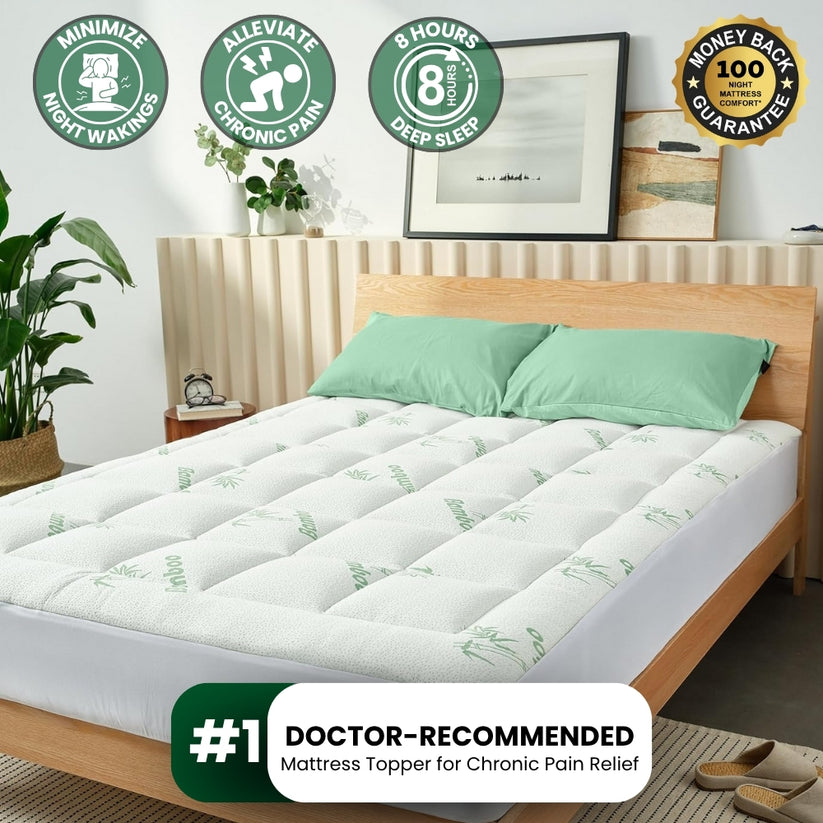
Cleveland Clinic: guidance on sleeping with sciatica, including sleep position, pillows and trying a mattress topper to make small changes to the existing mattress.
https://health.clevelandclinic.org/how-to-get-better-sleep-with-sciatica-pain
Healthdirect Australia: sciatica overview and treatment context.
https://www.healthdirect.gov.au/sciatica
CareCredit: published physical therapy consumer cost range.
https://www.carecredit.com/hospital-medical-billing/costs/
MDsave: MRI and image-guided epidural steroid injection cash-price benchmarks.
https://www.mdsave.com/procedures/mri-without-contrast/d781f5c9
https://www.mdsave.com/amp/procedures/epidural-steroid-injection-with-imaging-guidance/d483ffcd
Synergy Spine: published 2026 bundled cash pricing for lumbar endoscopic microdiscectomy / laminotomy.
https://synergyspinecenter.com/spine-surgery-cost-by-procedure/
Sleep Foundation: mattress pricing guidance.
https://www.sleepfoundation.org/mattress-information/how-to-choose-a-mattress